 ProjectLichen
We design land that looks after herself.
Nobody waters a forest. Nobody feeds it or weeds it. It still holds more water and grows more food than the farm on the same hill. We work out why, then help your land do the same.
The word for this is permaculture. It means ecological design: landscaping with ethics. Most of the people who call us have never heard it. That has never been a problem.
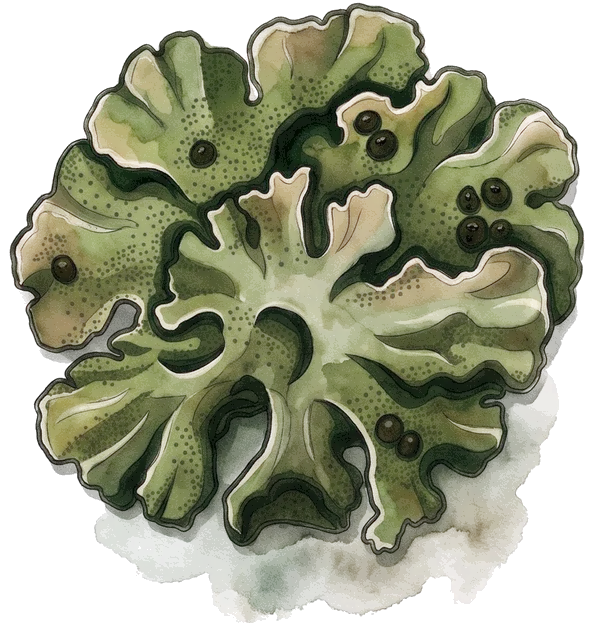
Why we are called Lichen
The first life to return to bare ground.
A lichen is two living beings, a fungus that holds on and shelters, and an alga that makes food from sunlight. Together they grow on bare rock where nothing else can.
Slowly they turn that rock into the first thin soil. Then moss comes, then grass, then shrubs and trees. We do the same on land that has been stripped, dried or tired out: start small, start with what is missing, and let life take over.
Most of the languages around us call it stone flower. You have almost certainly eaten it: the dark, smoky note in a Chettinad masala is lichen. It is also how we are built: separate practitioners who are more use joined than apart.
In your language: Lichen, शैवाक, ಕಲ್ಲುಹೂವು, கல்பாசி, കല്ലുപൂവ്, రాతిపువ్వు, दगडफूल
The idea, in one minute
Most land is kept alive. We help land learn to stay alive on her own.
A conventional farm runs on things you buy: water, fertiliser, labour, spray. Stop any one of them and it fails within a season. We work towards the opposite, so each year costs you less than the one before.
Water stays
We build rainwater harvesting structures. Rain is caught on your land and kept for use, instead of running off. The rest sinks down and refills your groundwater.
Soil builds itself
Healthy soil is alive. Worms, fungi and microbes turn leaves and roots into rich earth. We cover bare ground and feed that life, so the soil rebuilds itself.
Everything stacks
Trees, shrubs, roots and vines grow together in layers, each using a different slice of sun and soil. Plant a small space this way and one acre can yield like three.
Where you're starting from
People call us at six different moments.
You don't need to know what to ask for. Tell us which one sounds like you.
The work
Land we have restored.
Permaculture is easy to talk about and slow to prove. Restoration takes time, and these are sites where enough years have passed to tell the truth.
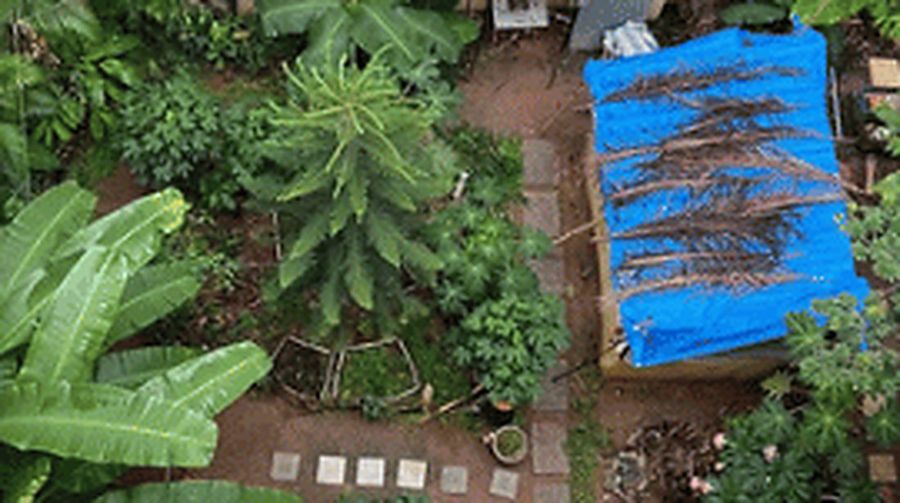
 BeforeNow
Avni Backyard Forest
A thousand square feet of lawn behind a rented building. Now closed canopy. The first site, and the one we learned most from.
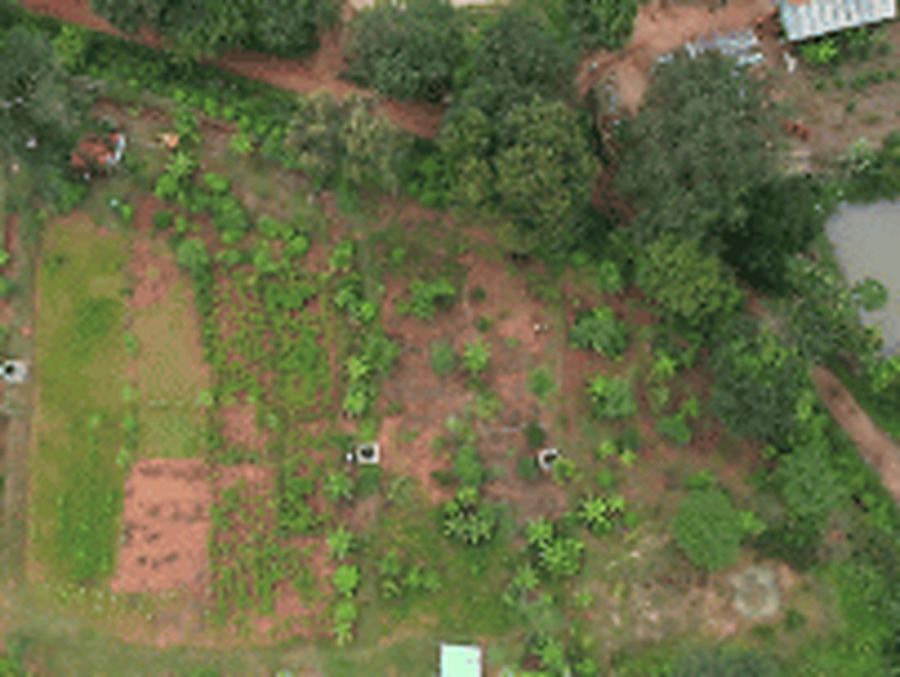
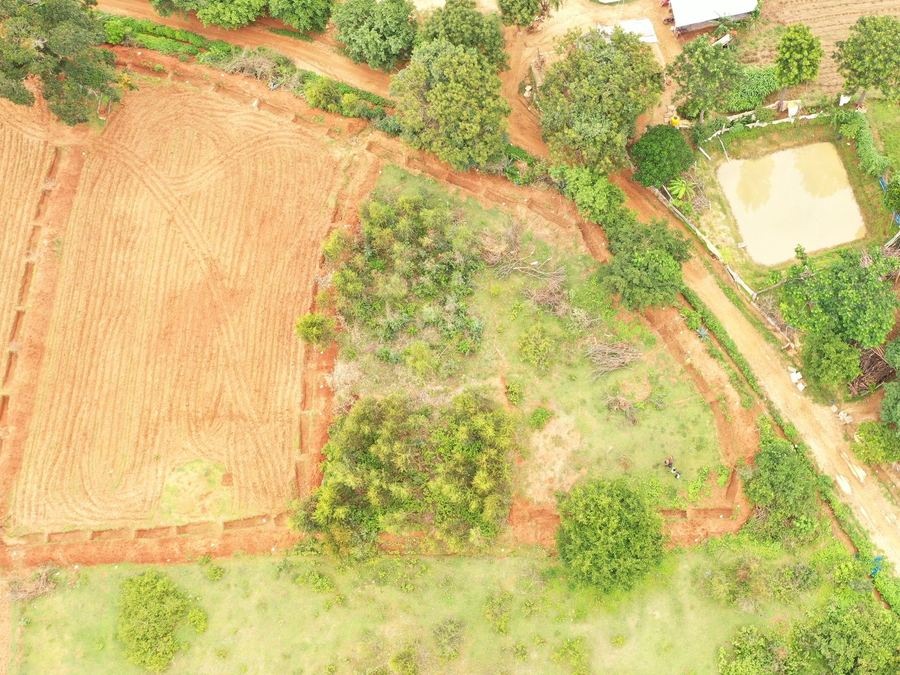 BeforeNow
Taranya
Sloped, topsoil stripped, abandoned by the farmer. The worst acre on a property is often the one worth starting with. Now our demonstration site.
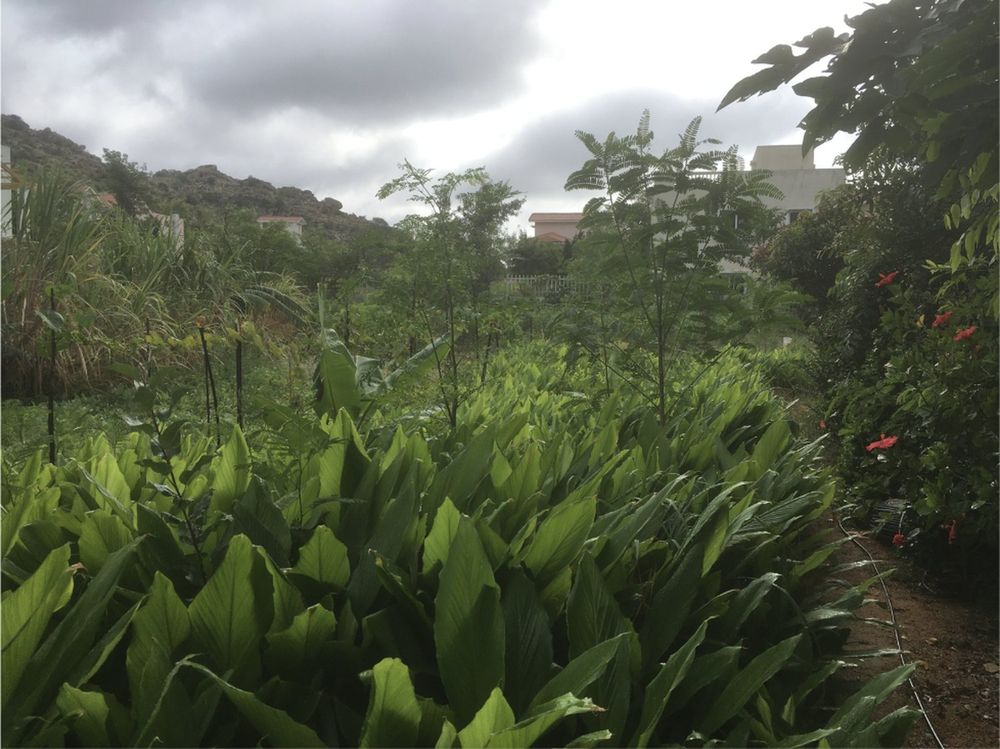
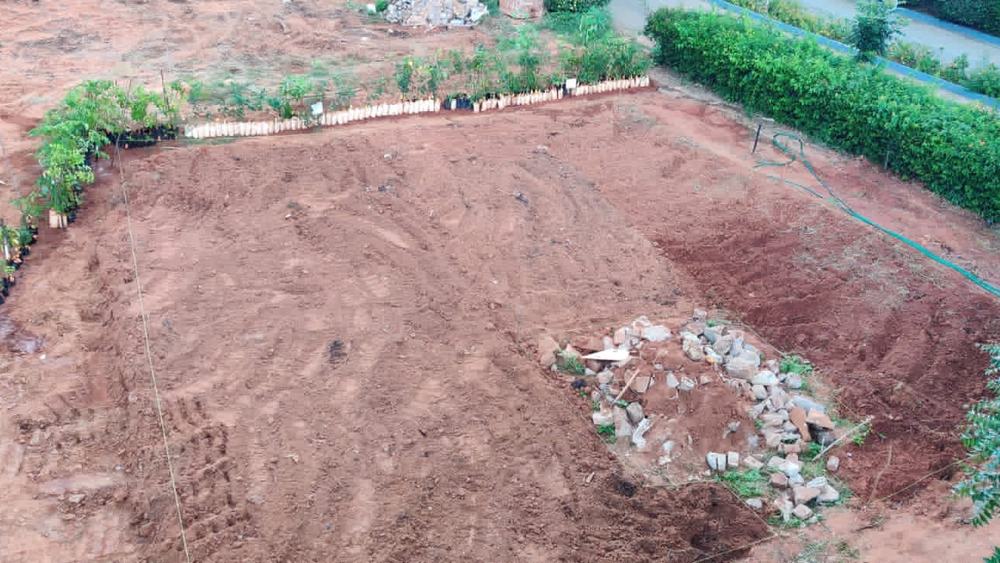 BeforeThree years on
Bilva
Water stagnating in the wrong places, soil with nothing left. We designed around both and let the land recover. Carrying annuals and perennials three years on.
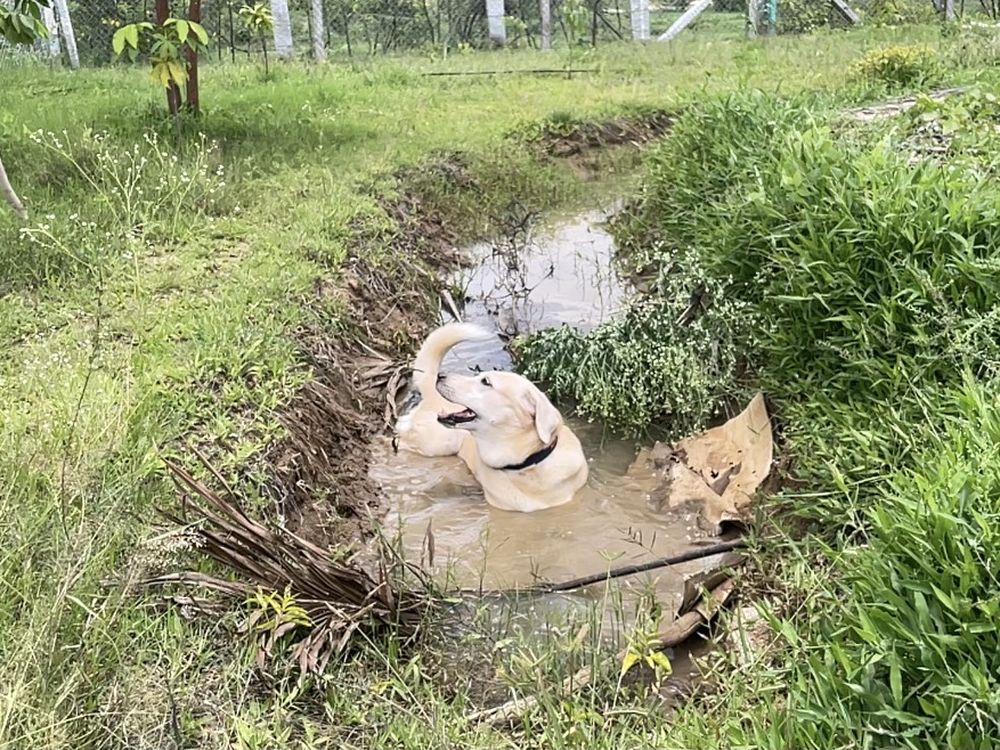
Abby's Farm
The custodians wanted to plant the land themselves, so we designed the system and worked alongside them until they could run it. It's theirs now, and named after their dog, who was first to find the water in the trenches.
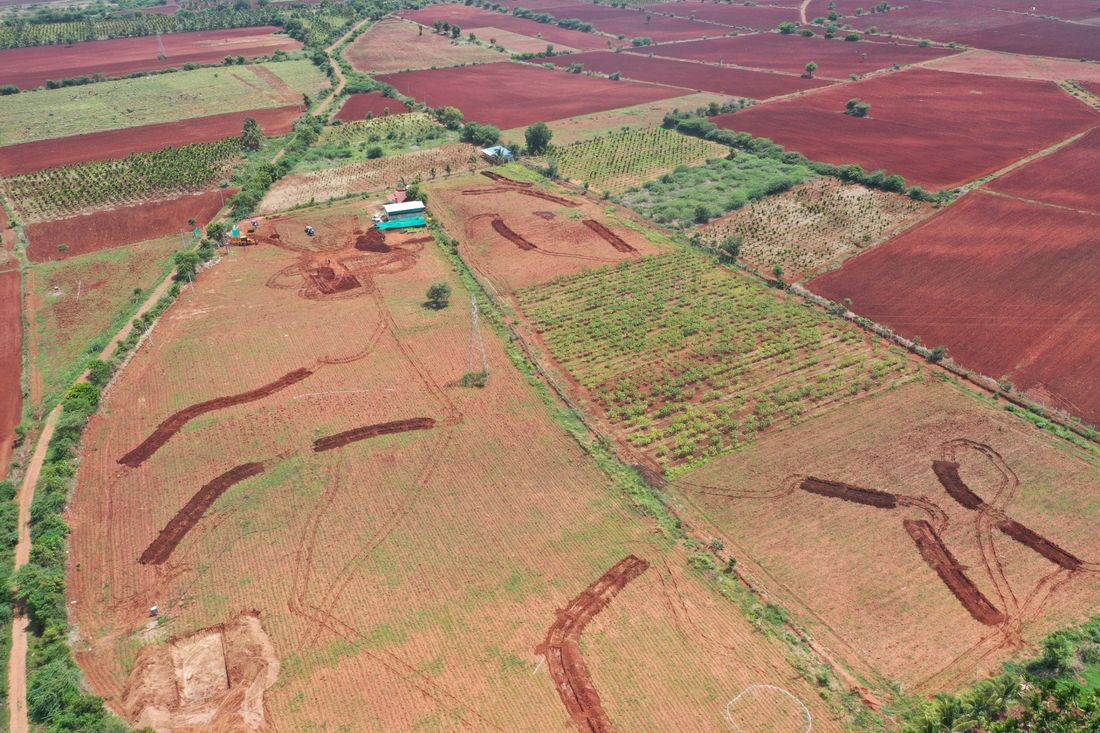
Sanjeevani Farms
Survey, water harvesting design, and a full year of implementation supervision. The trenches are cut and following the contour. Handover at the second monsoon.
Come and see one
Before you hire anyone, go and walk a piece of land.
We have sites at different ages across Karnataka, some a year old, some seven. Tell us what you're planning and we'll take you to whichever one comes closest. People usually decide while they are standing in one.
Some are easier to reach than others and a few need the custodian's permission, so give us a little notice.
What you actually get
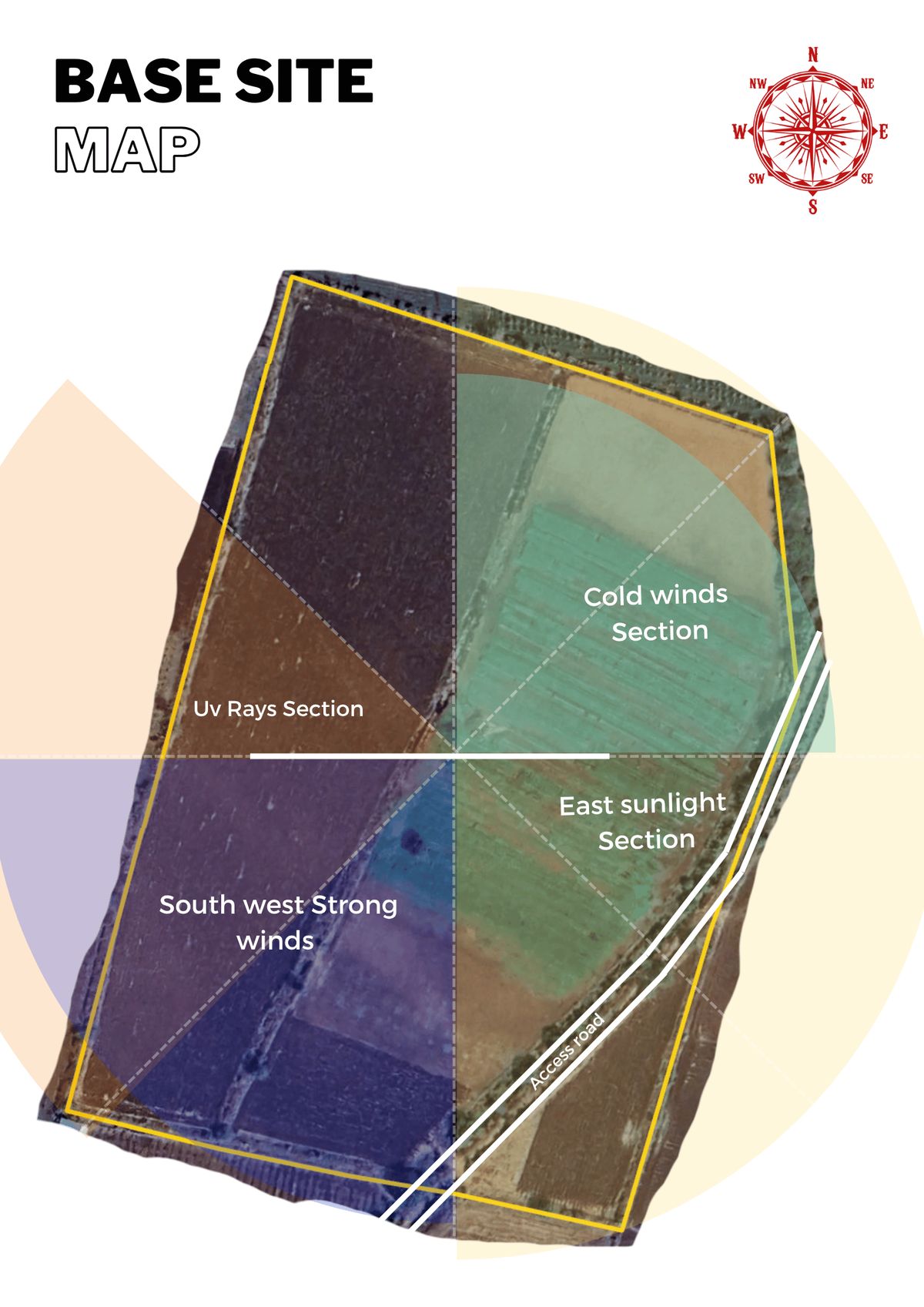
A design is seven maps and a sequence.
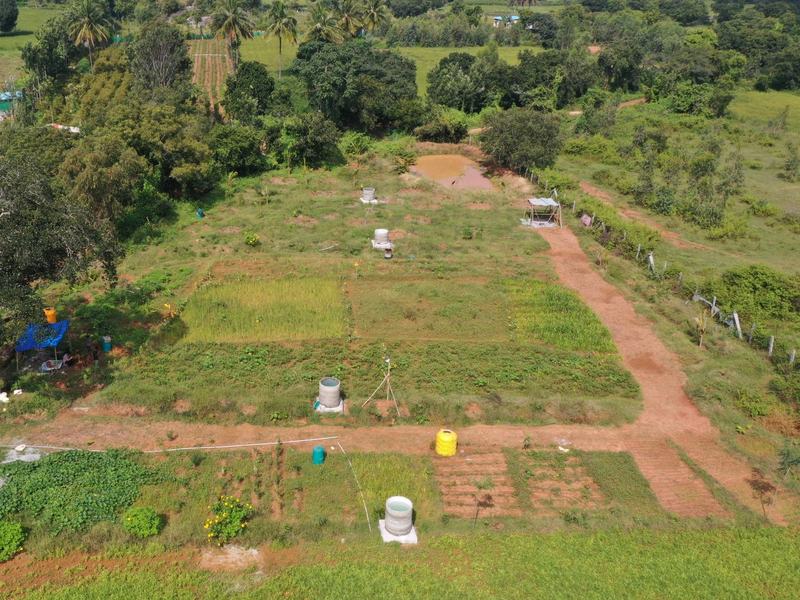
This is Sanjeevani Farms in Davangere, in progress right now. Each map answers one question about the land. The last one puts the answers together into something you can build in stages.
How it goes
Land moves at its own pace. So do we.
Nobody can hand you a finished landscape in a season. What we can do is help each year be cheaper and more alive than the last.
A basic read of the land and what she could become: water, slope, soil, and what is already growing. Observation before opinion.
A short report on what the land has the potential to do, and where we would begin. No design yet, so you can decide with the facts in hand.
If you want a design, water harvesting always comes first. Then, as the land needs, soil tests and a water-flow study, leading to the full permaculture design: the maps you saw above.
Earthworks, the first fast-growing plants that prepare the ground, planting out, and training your caretakers. This year looks messy. It is supposed to.
Irrigation and the systems that keep the land running. Visits through the seasons, including peak summer, which is the month that tells the truth about a design.
Once the system has been through a full cycle and held, we hand it over with final documentation. Or, if you prefer, we help manage the farm.
Who we are
One collective. The right expert, wherever your land is.
Land doesn't respect professional boundaries. A water problem is a soil problem is a building problem. As a collective, you get the expert your land needs, anywhere in India, without coordinating seven people yourself. Every design is read by a second member before it reaches you.
Rakshith Pawar U.
Design & spatial analysisPermaculture design, drone survey, contour mapping, implementation supervision. Came to land design through filmmaking.
Manish Chadda
Water & built structuresHydrology, water harvesting engineering, recharge and storage design, architecture and civil works.
Nauras Indori
Soil & living systemsSoil biology analysis, compost systems, indigenous vegetation, post-harvest and value-added produce.
Kevin Nadar
Yield & enterprisePermaculture design, mushroom cultivation, commercial farm proposals, route to market for organic produce.
Vikram Gattu
Architecture & natural buildingAn architect who has leaned his practice into permaculture thinking. Natural buildings, structures that belong to the site, and whole-site masterplanning.
Mukesh Bhardwaj
Western Ghats & implementationExperience across the Western Ghats and other high-rainfall land, including coffee and turmeric. Also runs implementation on the ground.
Neelima
Groundwater & aquifersShallow aquifers and recharge: how water moves under a site, and what a borewell is really drawing on. Also carries designs through on the ground.
What we do
Every piece of land is different, so what we do is too.
A steep two acres with four slopes can take more work than a flat ten. So we start by listening: we walk the land, understand what you want from her, then tell you what it will take.
What shapes the work: the size of the land, how complex the terrain is, how far we have to travel, and how much of the work you want us to carry. Travel and stay are billed at actuals.
The 2× package
Pay a little more than a standard design and we take on a second site alongside yours: a small farmer's land, at no cost to them. You get your full design. So does someone who could never have paid for one. We will tell you whose land it went to and send you what happens on it.
Start
Tell us about your land.
A short conversation first, no charge. If we're not right for your site we'll say so and point you somewhere better.
Or write to us at lichenrestores@gmail.com